AI Agents Are on the Factory Floor. Is Your Operation Ready?
July 22, 2026
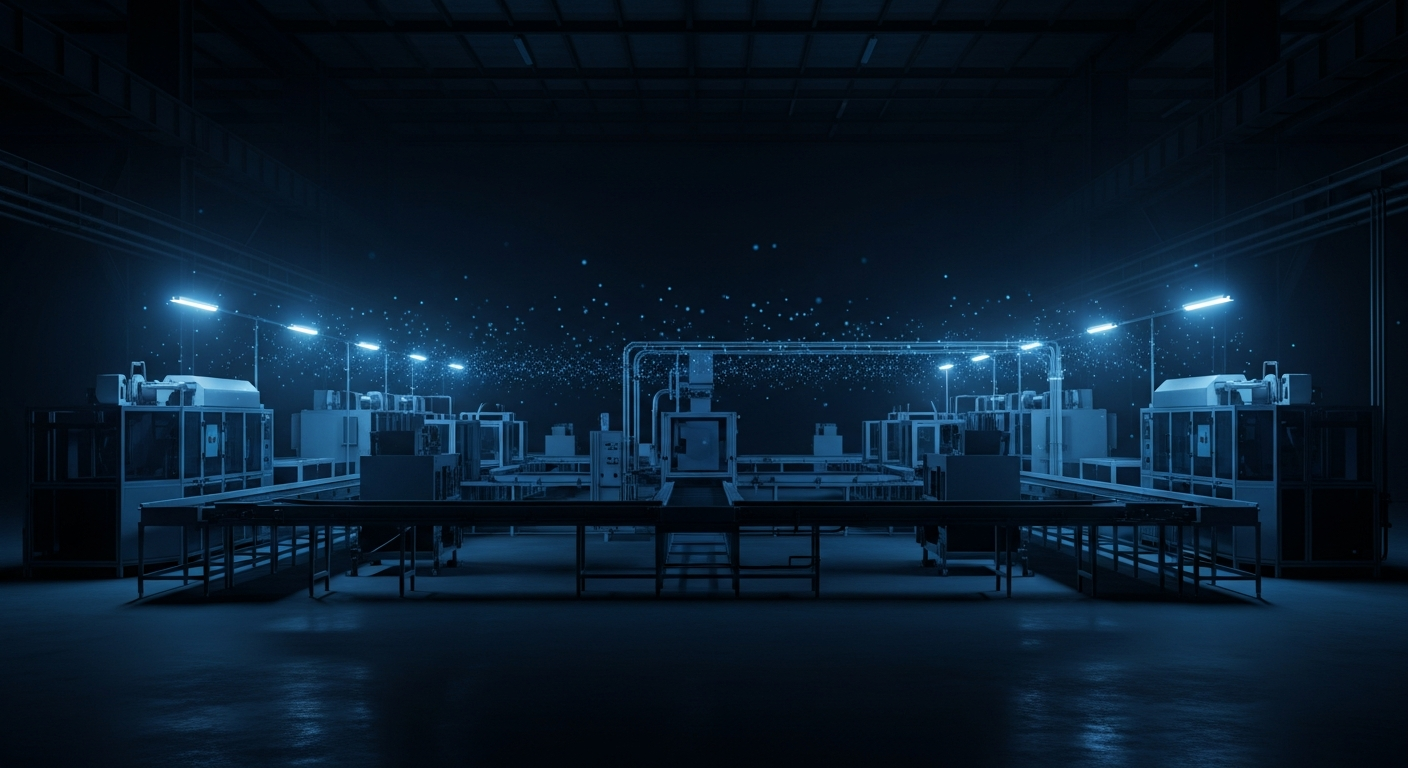
The Factory Floor Is Getting an AI Co-Pilot — Are You Ready?
Black Lake Technologies showed up at a major industrial conference last week demonstrating AI agents running directly on the factory floor. Not assisting workers. Not generating reports for managers to review later. Actually making operational decisions in real time.
That's the moment we're in.
If you run operations — whether that's a warehouse, a distribution center, a manufacturing line, or even a complex service workflow — the question isn't whether AI agents are coming to your industry. They're already there. The question is whether you're going to be the one who deploys them first or the one who scrambles to catch up in 18 months.
What Industrial AI Agents Actually Do
Let's be specific, because this space gets cloudy fast with vendor marketing.
An industrial AI agent isn't a chatbot bolted onto your ERP. It's a system that can observe a condition, reason about it, and take action — or trigger the next step — without a human in the loop for every decision.
Black Lake's demo showed agents monitoring production lines and adjusting parameters based on live sensor data. Think about what that replaces: a shift supervisor watching a dashboard, catching a variance, escalating it, waiting for a response. That loop might take 20-40 minutes on a good day. An agent closes that loop in seconds.
For context on why that matters: unplanned downtime in manufacturing costs an average of $260,000 per hour according to Aberdeen Research. Even shaving a few incidents per quarter has a material impact on the P&L.
But this isn't just a manufacturing story. The same logic applies to logistics routing, inventory replenishment, customer escalation queues, and procurement workflows. Anywhere you have a process with observable inputs and defined outputs, you have a candidate for an AI agent.
The Gap Most Operators Miss
Here's where I see companies get stuck — and I've been in enough ops roles to recognize the pattern.
They look at AI agents as a technology decision. They send it to IT. IT evaluates vendors. Nothing ships for a year.
The operators who are winning right now are treating this as a *process* decision first. They're asking: where in our workflow is a human making a repetitive judgment call based on data we already have? That's the target.
One distribution client we worked with had a team of three people whose primary job was exception handling — orders that flagged for manual review because they hit some threshold in the system. Address anomalies, weight discrepancies, customer credit limits, that kind of thing. About 70% of those exceptions were resolved the same way every time. Pattern recognition wrapped in a human.
We mapped the decision logic, built an agent to handle that 70%, and cut the exception queue backlog from 48 hours to under 4. The three people still have jobs — they're now handling the genuinely complex 30% that actually needs human judgment. Throughput went up. Stress went down.
That's not a $2 million transformation project. That was a focused 6-week engagement.
What You Should Do This Week
If you're a founder or operator trying to figure out where to start with AI agents, here's a practical approach:
Identify your repetitive judgment calls. Walk your workflows and find the spots where someone is making the same decision over and over based on structured data. These are your highest-probability wins.
Quantify the cost of delay. Every hour in that exception queue, every slow response to a production variance, every manual routing decision — put a number on it. You need to know what the problem is worth before you can evaluate a solution.
Start narrow. Don't try to automate an entire department. Pick one workflow, one decision type, and go deep on it. A focused agent that handles one thing reliably is worth more than a broad pilot that does six things poorly.
Demand explainability. Especially in operations, you need to know why an agent made a call. If a vendor can't show you the decision logic, don't deploy it in a critical workflow.
The industrial AI agent era isn't a future state. Black Lake demoing on the factory floor last week is the present state. The companies that treat this as a process improvement opportunity — not a tech experiment — are the ones that will have a meaningful lead by 2027.
If you want to map where AI agents can actually move the needle in your operations, that's the work we do at DeGrand.